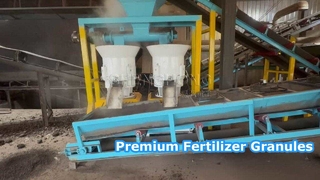
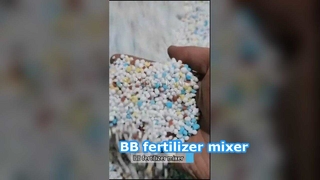
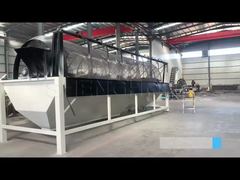
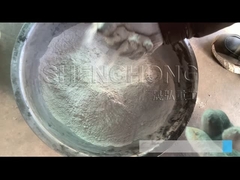
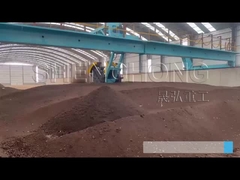
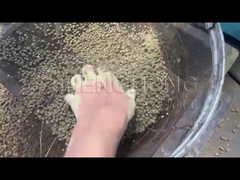
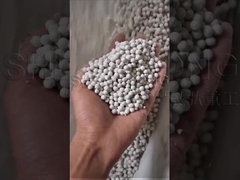
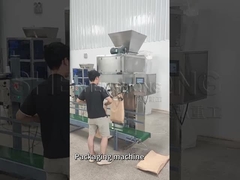
Brief: Explore what sets this solution apart in an easy-to-follow presentation. This video showcases the 1.5t/H Disc Organic Fertilizer Granulating Machine in action, demonstrating how it efficiently processes bio-organic materials into uniform, spherical granules. You'll see a detailed walkthrough of its working principles, from motor-driven rotation to the automatic feeding system, and learn how its adjustable disc angle and reliable design ensure high granulation rates and smooth operation for small to medium-scale production.
Related Product Features:
Processes fertilizers into uniform, spherical particles of the same size for consistent quality.
Features a simple structure with high granulating efficiency and reliable performance for dependable operation.
Driven by a motor reducer and gear system to continuously rotate the granulation disc.
Includes an automatic material feeding system to prevent wall sticking and extend machine lifespan.
Adjustable disc angle between 40°-55° to optimize the granulation process for different materials.
Designed for easy operation and convenient maintenance, reducing downtime and operational complexity.
Suitable for medium or low concentration, small-scale production in various industries like agriculture and chemicals.
Constructed with anti-corrosive properties to ensure longer service life in demanding environments.
Faqs:
What is the production capacity of this disc granulator?
The production capacity varies by model, ranging from 1-1.5 tons per hour for the ZL25 model up to 10 tons per hour for the ZL45 model, making it suitable for small to medium-scale operations.
What industries can use this bio-organic fertilizer production line?
This granulator is widely used in gold concentrators, coal mines, chemical plants, construction, and foundries for quantitative and even feeding, and is ideal for processing materials with granularity less than 50mm.
How does the disc granulator ensure uniform particle size?
The granulation disc rotates continuously, and a spray device evenly bonds materials together. Combined with gravity and the disc's motion, this process shapes materials into spherical particles of consistent size.
What are the key advantages of using this machine?
Key advantages include high granulating rate, high strength of particles, round and uniform shape, anti-corrosive construction, easy operation, and convenient maintenance, ensuring efficient and reliable performance.